Lake Blue Ridge: The Mountain Lake That Powers a Getaway
A 3,290-acre lake ringed by national forest, three miles from downtown — Lake Blue Ridge offers boating, beaches, camping, and some of Georgia's best walleye fishing.
Blue Ridge Community Staff

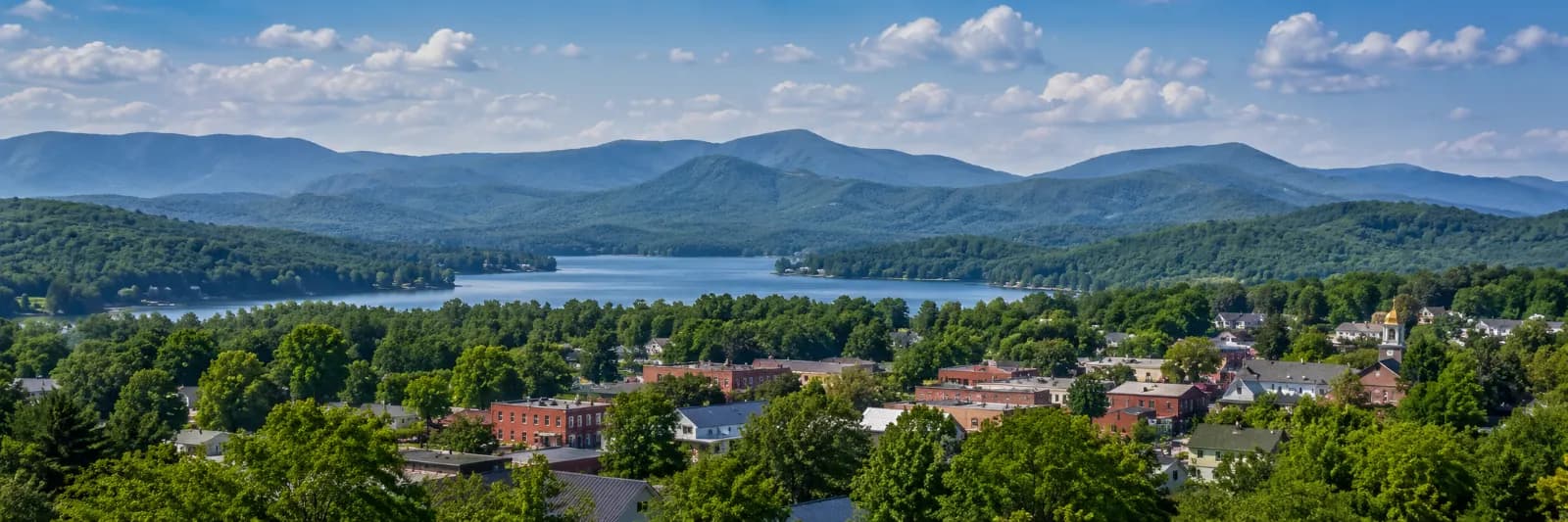
Three miles southeast of downtown, the mountains open onto 3,290 acres of clear water ringed almost entirely by national forest. Lake Blue Ridge is the centerpiece of a Fannin County getaway — a place for boating and beach days in summer, fall color over the water in autumn, and some of the best walleye fishing in Georgia year-round.
- Size: About 3,290 acres, roughly 11 miles long
- Setting: Around 75% of the shoreline is undeveloped Chattahoochee National Forest
- Location: ~3 miles southeast of downtown Blue Ridge; about 90 miles north of Atlanta
- Managed by: The Tennessee Valley Authority (TVA)
- Famous for: Walleye fishing, clear water, and fall scenery
A dam older than the TVA
Here’s a fact that surprises a lot of people: although the Tennessee Valley Authority manages Lake Blue Ridge today, the TVA didn’t build the dam. Blue Ridge Dam — an earthen embankment about 175 feet high — was built by a private utility, the Toccoa Electric Power Company, in the late 1920s and completed around 1930, before the TVA even existed. The TVA acquired it in 1939. Originally built purely for hydroelectric power, the dam now also helps with flood control on the Toccoa River.
On the water
Public Forest Service boat ramps put you on the lake for skiing, tubing, or a slow pontoon cruise, and the Lake Blue Ridge Marina rents pontoons, kayaks, and paddleboards if you didn’t bring your own. For a beach day, head to Morganton Point on the north shore, which has the lake’s designated swimming area plus a Forest Service campground — the spot to book if you want to sleep by the water.
Lake Blue Ridge is widely considered Georgia’s top lake for walleye, and it’s one of the few reservoirs in the state with smallmouth bass. It even holds Georgia’s state-record muskellunge — a 38-pounder caught here back in 1957. Below the dam, the cold Toccoa tailwater is prime trout water, part of why Blue Ridge is the state-designated “Trout Capital of Georgia.”
When to go
Summer is for the water — boating, swimming, and lazy afternoons on a rented pontoon. But many locals will tell you the lake is at its best in fall, when peak foliage (typically late October into early November) sets the surrounding ridges ablaze and mirrors them on the water. It’s the same scenery that fills the area’s thousands of rental cabins every leaf season.
- Surface area: ~3,290 acres · Length: ~11 miles
- Shoreline: roughly 60–65 miles, mostly national forest
- Dam: earthen, ~175 ft high; completed ~1930; TVA-acquired 1939
- Top catches: walleye, smallmouth & spotted bass, bream, catfish; trout in the tailwater
Cover photo: Lake Blue Ridge Marina, by jwshaw via Wikimedia Commons (CC BY-SA 3.0). Sources include the Tennessee Valley Authority, the U.S. Forest Service, Georgia DNR, Explore Georgia, and the Fannin County Chamber of Commerce.
Continue this story for free.
Stay informed about Blue Ridge Georgia. Enter your email to access the full story and receive local news and community updates.
Free to read · No password to remember
New here? We’ll email you a sign-in link and code. Already a reader? Use your usual email.
Read next

The Swinging Bridge and the Aska Trails: Blue Ridge's Backyard Wilderness
A 270-foot footbridge that sways over the Toccoa River and 17 miles of mountain trails — the Aska Adventure Area is where Blue Ridge goes to hike, bike, fish, and paddle.
Read the story ↗

Comments
What does this mean for your neighborhood? Share your experience or ask a question.
Your draft stays here while you sign in. Be respectful and keep it local.
No comments yet. Be the first to share your thoughts!